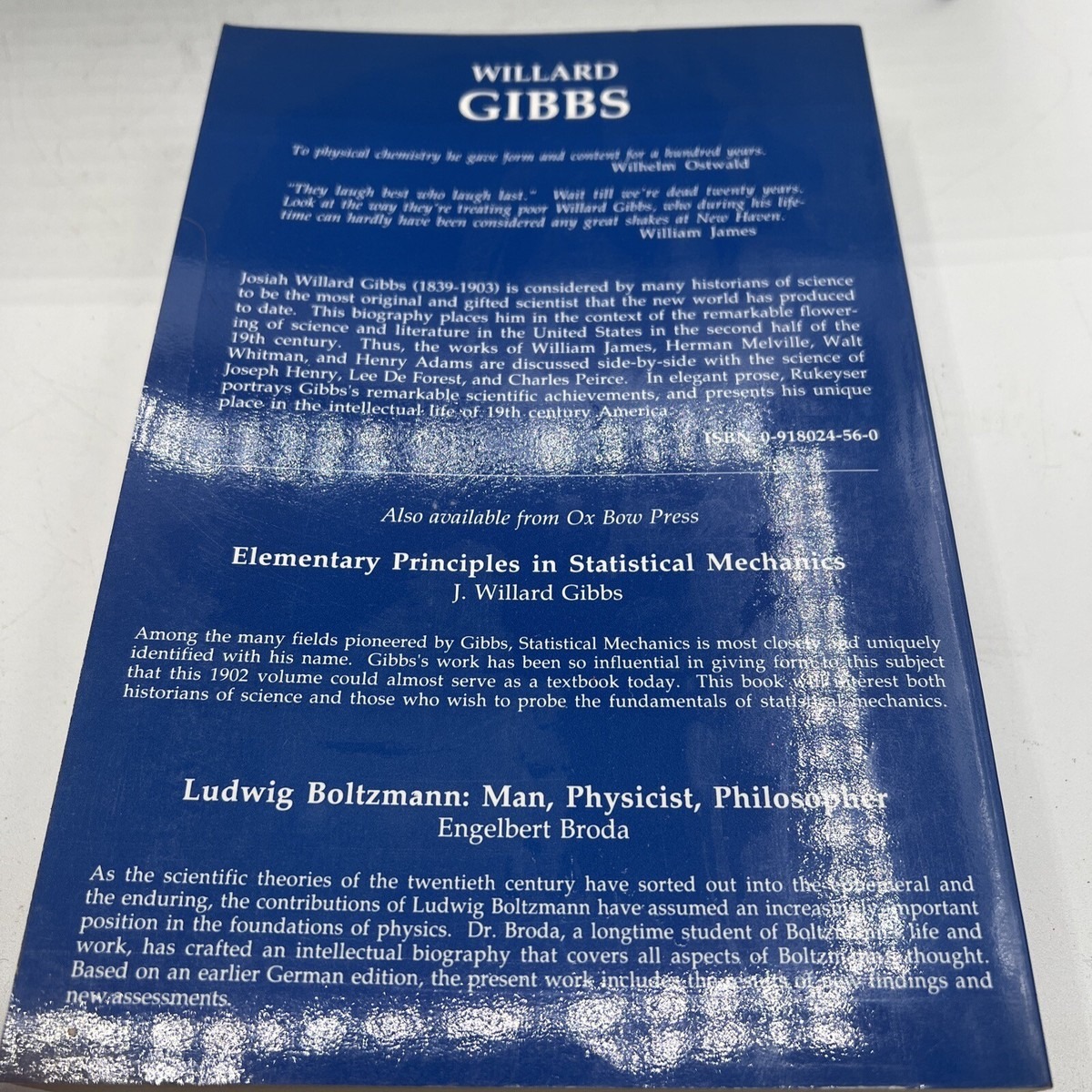
Gibbs Statistical Mechanics 1902: 8 Keys to Ensemble Theory
솔직히 고백하건대, 현재 직면한 난제의 돌파구를 찾기 위해 J. W. 깁스의 '통계역학의 원리'를 다시 펼쳤을 때, 제가 느낀 것은 일종의 '전율 섞인 절망'이었습니다. 이 책에는 어설픈 위로나 희망적인 추측이 단 한 줄도 없었기 때문입니다. 대신, 그 자리엔 감정이 완전히 거세된 차가운 침묵과, 잔혹할 정도로 정교한 수식만이 흐르고 있었습니다.
우리는 흔히 "더 많이 알수록, 더 정확해진다"는 착각 속에 빠져 있습니다. 변수 하나하나를 통제하고, 입자 하나의 움직임까지 예측해야만 완벽한 해답에 도달할 수 있다고 믿습니다. 하지만 지금 제가 풀고자 하는 문제는 그러한 미시적 접근이 불가능한 영역에 있습니다. 개별 변수들의 무한한 춤사위에 현혹될수록, 정작 거대한 흐름은 시야에서 사라지기 때문입니다.
바로 이 지점에서 깁스는 120년의 시간을 건너와 서늘한 통찰을 던집니다. 그는 우리의 '무지(Ignorance)'를 인정하는 것에서부터 진짜 해석을 시작합니다. "모든 것을 알려고 하지 마라. 대신 우리가 모른다는 사실 자체를 하나의 조건으로 삼아라." 그는 개별 입자의 사연에 집착하는 것을 멈추고, 그 모호함 전체를 '앙상블(Ensemble)'이라는 확률의 구름으로 치환해 버립니다. 그리고 놀랍게도, 그 통계적 덩어리 안에서 시스템은 비로소 숨겨진 평형 상태, 즉 '필연적인 해답'을 드러냅니다.
이 포스팅은 단순한 고전의 요약이 아닙니다. 이것은 불확실한 혼돈(Micro) 속에서 확정적인 질서(Macro)를 도출해내기 위한, 지극히 실용적인 '도구'로서의 독해입니다.
저는 깁스가 설계한 위상 공간(Phase Space)이라는 추상적 무대를 빌려, 지금 우리 앞을 가로막고 있는 복잡한 데이터들을 다시 배열하려 합니다. 개별적인 노이즈들이 서로 상쇄되고, 결국 가장 확률 높은 상태로 수렴해가는 그 냉철한 과정을 추적함으로써, 우리는 막연한 추측이 아닌 수학적으로 증명된 '구조적 진실'을 마주하게 될 것입니다.
오늘의 학습 노트는 1902년 깁스가 설계한 사유의 프레임워크를 해체하여, 현재의 문제를 풀기 위한 엔진으로 이식하는 작업입니다. 자, 이제 감정을 배제하고, 1902년의 코네티컷으로 돌아가 그가 설계한 청사진을 훔쳐보려 합니다. 답은 이미 그곳에 정교하게 숨겨져 있었을지도 모릅니다.
Ensembles Canonically Distributed in Configuration
In the grand library of scientific thought, few volumes remain as pristine and foundational as J. W. Gibbs’ Elementary Principles in Statistical Mechanics. Published in 1902, barely a year before his death, this seminal work did not merely describe a branch of physics; it essentially constructed the syntax for understanding complexity. For the modern analyst observing the statistical ensemble approach and collective behavior, Gibbs offers more than thermodynamics. He offers a lens through which to view any system—be it a canister of gas, a swarm of drones, or the volatility of financial markets—where the sheer number of variables precludes exact tracking, yet necessitates precise prediction.
Gibbs introduces us to a world where ignorance is not a failure, but a variable to be managed. When we cannot know the position and momentum of every particle, we retreat to the statistical ensemble, a mental construction of replicas of the system, allowing us to trade impossible microscopic certainty for robust macroscopic probability. This essay traverses the specific chapters of his 1902 treatise, decoding the logic that governs the transition from noise to signal.
General Notions and The Principle of Conservation
The journey begins with the bedrock of mechanics: the Hamiltonian equations of motion. Gibbs establishes early on that to understand collective behavior, one must abandon the hope of tracking individual trajectories. Instead, he posits the system as a single point moving through a high-dimensional conceptual map known as phase space.
The crucial insight here is the Principle of Conservation. Just as energy is conserved in a closed system, Gibbs directs our attention to the conservation of extension in phase. If we imagine a cluster of possible states of a system moving through time, the volume they occupy in this phase space remains constant. This is not merely a geometric curiosity; it is the first hint of an underlying order in chaos.
Consider the implications for a statistical ensemble approach. Even if the system is incredibly complex, the information contained within the ensemble does not vanish. It merely changes shape, stretching and folding like ink in water. This conservation principle (often associated with Liouville’s Theorem) assures us that the evolution of probability is deterministic, even if the individual outcomes seem random. The density of points in phase space—representing the likelihood of finding the system in a specific state—moves like an incompressible fluid. This fundamental notion suggests that chaotic systems are not lawless; they are simply governed by laws of flow and volume that operate in dimensions beyond our immediate perception.
Principle of Conservation of Density in Phase
Expanding on the general notions, Gibbs explicitly formulates the Principle of Conservation of Density in Phase. Here, the statistical ensemble is treated as a distribution of probability. Let D be the density of points in phase space. Gibbs shows mathematically that if we move along with the dynamical flow of the system, this density D remains distinct and constant.
This equation, seemingly simple, is profound. It implies that "perfect" knowledge (a tight cluster of points in phase space) cannot degrade into "zero" knowledge (an infinite spread) purely through mechanical evolution. The "sharpness" of our probability distribution is preserved. For the analyst studying collective behavior, this is a double-edged sword. It means that while the system's dynamics won't destroy information, they will scramble it so effectively that it becomes irretrievable to a coarse observer.
Gibbs envisions the phase space as a bounded territory—a DMZ of sorts—where these probability fluids circulate. The particles (or agents in a market) interact, exchange energy, and disperse, yet the fundamental measure of their collective existence remains invariant. This chapter teaches us that in any large-scale system, the "amount" of probability is a conserved currency. We cannot create certainty out of thin air, nor does uncertainty truly swallow everything; it simply becomes more complexly distributed.
Coefficient and Index of Probability of Phase
To quantify this distribution, Gibbs introduces the Coefficient and Index of Probability of Phase. He recognizes that dealing with raw probability density P can be cumbersome, especially when densities vary across orders of magnitude. Thus, he introduces the index of probability, η, defined essentially as the logarithm of the probability density.
This is the precursor to the modern concept of entropy. By shifting from raw probability to its logarithm, Gibbs gives us a tool to measure the "spread" or "uncertainty" of the statistical ensemble. A high index indicates a highly specific, ordered state; a low index implies a spread-out, disordered state.
In the context of collective behavior, the index of probability acts as a thermometer for the system's information content. When a focused trend breaks down into noise, we are witnessing a change in the distribution of η across the ensemble. Gibbs meticulously derives how this index behaves, laying the groundwork for the connection between statistical mechanics and thermodynamics. He argues that while the density is locally conserved, the coarse-grained mixing of the system leads to an effective decrease in the index—a foreshadowing of the Second Law of Thermodynamics. The ensemble naturally drifts toward states that occupy the largest available volume in phase space, anticipating the behavior of crowds and markets that drift toward equilibrium.
Application of the Principle of Conservation of Probability of Phase
Gibbs then moves to the Application of the Principle of Conservation of Probability of Phase. He demonstrates how these abstract principles constrain physical reality. If the probability density is conserved, then the average behavior of the statistical ensemble must follow strict rules. He uses this to establish the conditions for statistical equilibrium.
For a system to be in a steady state—where the collective behavior appears constant despite the furious motion of individual parts—the distribution of probability must be a function of the constants of motion, primarily energy. This is a critical pivot point in the text. It explains why large systems settle down. They are not stopping; they are simply entering a regime where their probability flow is stationary.
On the Distribution in Phase Called Canonical
Here we arrive at the crown jewel of the treatise: the Canonical Distribution. Gibbs proposes a specific form for the probability density P in phase space, which he terms "canonical."
In this elegant expression, E is the energy of the state, Θ (theta) corresponds to temperature (or modulus), and ψ (psi) is a normalization constant (related to free energy). This formula encapsulates the essence of the statistical ensemble approach. It states that the probability of finding the system in a specific configuration decreases exponentially with the energy of that configuration.
The Canonical Ensemble describes a system in thermal contact with a heat bath—or metaphorically, a sub-sector of a market interacting with the global economy. It is the most natural distribution for a system with a fixed average energy. Gibbs argues that this distribution is unique in its mathematical simplicity and its ability to represent the physical world. It represents a decentralized autonomous organization of particles, where no central commander dictates positions, yet the global constraint of temperature forces the collective behavior into this exponential curve.
The beauty of the Canonical Distribution lies in its "heavy tail" suppression but non-zero probability for high-energy states. It acknowledges that extreme events (high E) are rare but possible, determined strictly by the modulus Θ. For anyone studying volatility or swarm dynamics, the Canonical Distribution is the baseline model of randomness under constraint.
Differential Equation Relating to Average Values in a Canonical
Having established the Canonical form, Gibbs proceeds to derive the Differential Equation Relating to Average Values. He is not content with static descriptions; he wants to know how the system responds to change. What happens if the temperature (Θ) rises? What if the volume changes?
Gibbs derives relations that link the fluctuations of the system to its response functions. For instance, he shows that the average energy of the statistical ensemble is linked to the derivative of ψ with respect to Θ. More importantly, he connects the "fluctuation" in energy (the variance) to the specific heat of the system.
This is a profound insight into collective behavior: the variability of a group is directly related to its susceptibility to external influence. A rigid system (low specific heat) has small fluctuations; a flexible system (high specific heat) fluctuates wildly. Gibbs provides the differential equations that govern these relationships, effectively giving us the "greeks" (in financial terms) of the physical system. He proves that we can probe the hidden structure of the ensemble simply by observing how its averages shift when we tweak the parameters.
System of n Degrees of Freedom — Average Value of Kinetic Energy
Gibbs then scales his analysis to a System of n Degrees of Freedom. He specifically tackles the Average Value of Kinetic Energy. This section bridges the gap between the abstract ensemble and the tangible world of temperature and motion.
He demonstrates the Equipartition Theorem within the framework of the statistical ensemble. In a canonical distribution, the average kinetic energy associated with each degree of freedom is exactly 1/2Θ. Whether it is a light hydrogen atom or a heavy uranium atom, if they are in the same ensemble, their "thermal" energy is identical.
This result is a triumph of the statistical ensemble approach. It confirms that in equilibrium, energy is democratically distributed across all possible modes of motion. In terms of collective behavior, this implies a universal tendency toward sharing "excitation" equally among all available channels.
Ensembles Canonically Distributed in Configuration
Moving beyond simple kinetic energy, Gibbs explores Ensembles Canonically Distributed in Configuration. He separates the kinetic part of the energy (related to momentum) from the potential part (related to position/configuration). He shows that for standard systems, these two aspects of probability decouple. We can analyze the statistics of positions (where the particles are) independently of their momenta (how fast they are moving). This simplification allows for the analysis of structure—crystals, liquids, or social clusters—separately from the analysis of temperature.
In the study of collective behavior, this distinction is vital. It implies that the "architecture" of the group (configuration) follows a Boltzmann-like distribution determined by the potential energy landscape. Agents will cluster in "low cost" (low potential energy) configurations, but thermal noise (theta) will constantly kick them into higher energy, rarer configurations. Gibbs provides the mathematical tools to calculate exactly how often these rare configurations occur. It is a study of how structure emerges from the competition between the drive for order (minimum energy) and the drive for disorder (maximum entropy).
Average Values of Powers of the Energies
Finally, Gibbs delves into the Average Values of Powers of the Energies. He looks at higher-order moments of the energy distribution—E2, E3, and so on. Why does this matter? Because the average (mean) tells only part of the story. The higher powers reveal the shape of the distribution—its skewness, its kurtosis. Gibbs derives exact formulas for these moments within the Canonical Ensemble. He shows that for a system with a very large number of degrees of freedom (large n), the fluctuations become negligible compared to the total energy. The distribution becomes incredibly sharp, almost a delta function.
This explains why collective behavior in massive systems appears so deterministic. The relative error or "noise" scales as 1/√n. When n is 1023 (as in a mole of gas), the anomaly vanishes. However, Gibbs’ analysis of power laws also hints at what happens when n is small, or near critical points where fluctuations do not cancel out. For the modern reader, this chapter is a masterclass in understanding the limits of predictability. It mathematically defines the boundary between the unpredictable individual and the predictable mass.
Closing Thoughts on the Ensemble
Gibbs’ Elementary Principles is not merely a textbook; it is a manifesto for the statistical worldview. By defining the statistical ensemble, the conservation of phase density, and the canonical distribution, Gibbs gave us the keys to unlock systems of irreducible complexity. He showed us that when we give up on tracking the individual, we gain the power to predict the whole. In the dance of probability, from the conservation laws to the average energy of n degrees of freedom, we find that chaos is not the absence of order, but a different kind of order—one built on the silent, unyielding laws of the ensemble.
Summary and Insights
- A Paradigm Shift: We must abandon the futile pursuit of tracking individual particle trajectories (Micro) and shift to a Statistical Ensemble approach that manages the probability distribution of the entire system (Macro). This is akin to moving from analyzing individual stock price fluctuations to managing the Volatility of the entire market.
- The Law of Conservation: Within Phase Space, the density of probability is strictly conserved (Liouville's Theorem). Information never vanishes; it merely changes its form.
- Optimized Distribution: A system in its natural state follows the Canonical Distribution, which minimizes energy while maximizing entropy. This represents the most probable state of nature under given constraints.
- Convergence to the Mean: As the degrees of freedom (n) increase, the system's variability decreases, converging towards a predictable average. This explains why large-scale collective behavior exhibits consistent, deterministic patterns despite individual chaos.
My Private Reflection: The Shadow of the Ensemble (Insight)
To read Gibbs' 1902 treatise merely as a physics textbook is to witness only half the picture. I perceive the 'Dawn of Information Theory' within these pages. The average value of the probability index $\eta$, as defined by Gibbs, is mathematically identical to the Information Entropy defined by Claude Shannon in 1948, nearly half a century later.
At a time when the very existence of atoms was still a subject of debate, Gibbs mathematically quantified 'what we do not know' about a system. The Canonical Distribution is, in essence, the "most unbiased (maximally random) guess" possible under the constraint of a given average energy.
Gibbs had already pierced through to a profound truth: Statistical Mechanics is not merely a set of natural laws, but the most rational logical framework for an observer with incomplete information to comprehend the world.
Frequently Asked Questions (FAQ) ❓
Q: What exactly is an Ensemble?
A: Instead of studying a single real system, an ensemble refers to a collection of countless hypothetical replicas of that system, all sharing identical macroscopic conditions. This allows us to calculate properties by replacing a difficult-to-track "time average" with a statistically manageable "ensemble average."
Q: Why is the Canonical Distribution so crucial?
A: Because it most accurately describes a system interacting with a Heat Bath at a constant temperature. Most natural phenomena exist in a state where energy is not strictly fixed, but fluctuates around a mean value maintained by the environment.
무심한 우주의 위로 (The Comfort of Indifference)
1902년, 깁스가 펜 끝으로 그려낸 위상 공간(Phase Space)에는 신의 자비도, 인간의 사정도 개입할 틈이 없습니다. 오직 exp( (ψ - E) / Θ ) 라는 지수함수의 곡선만이 존재할 뿐입니다. 어떤 이들에게 이 차가운 수식은 절망일지 모릅니다. "나의 노력, 나의 개별성, 나의 치열한 하루가 결국 통계적 덩어리(Ensemble) 속의 점 하나로 수렴된다는 말인가?" 하지만 역설적이게도, 바로 그 '무심함(Indifference)' 속에 우리가 찾던 구원이 있습니다. 우리가 겪는 혼란은 시스템이 잘못되었기 때문이 아닙니다. 단지 우리가 개별 입자의 궤적에 집착하며 '모든 것을 통제하려는 오만'을 부렸기 때문입니다. 깁스는 120년의 시간을 건너와 우리에게 나지막이 조언합니다. > "통제할 수 없는 변수와 싸우지 마라. 대신 너의 무지(Ignorance)를 인정하고, 그 불확실성 전체를 하나의 조건으로 받아들여라." 당신이 마주한 난제, 시장의 광기, 혹은 삶의 예측 불가능한 변동성 앞에서 더 이상 떨지 마십시오. 개별 사건은 무작위적(Random)일지라도, 그 총합은 언제나 필연적인 평형(Equilibrium)을 향해 흐릅니다. 이것은 희망이 아닙니다. 구조입니다. 이제 돋보기를 내려놓고, 한 걸음 물러서서 당신만의 '앙상블'을 바라보십시오. 그 흐릿한 확률의 구름 속에 구조는 이미 형성되어 있습니다. 당신의 위상 공간은 안녕하십니까?