본 글은 우주의 근원적 진리를 탐구하는 초끈 이론의 수학 구조를 현대 금융 시스템의 복잡성 관리와 데이터 압축 메커니즘으로 동형 사상(Isomorphic Mapping)합니다. 점입자에서 끈으로의 전환, 이상 상쇄, 그리고 칼라비-야우 다양체를 통한 차원 축소의 과정을 통해, 복잡다단한 시장의 확률론적 난류(Stochastic turbulence)를 본질적인 저차원의 유효 이론으로 묶어내는 여정을 담았습니다.
Have you ever felt entirely crushed under the weight of an incomprehensibly complex system? This profound exploration ventures into the seminal architecture of Green, Schwarz, and Witten to reveal how the universe elegantly compresses ten-dimensional realities into our four-dimensional existence, offering a masterclass in decoding both cosmic and financial complexity.
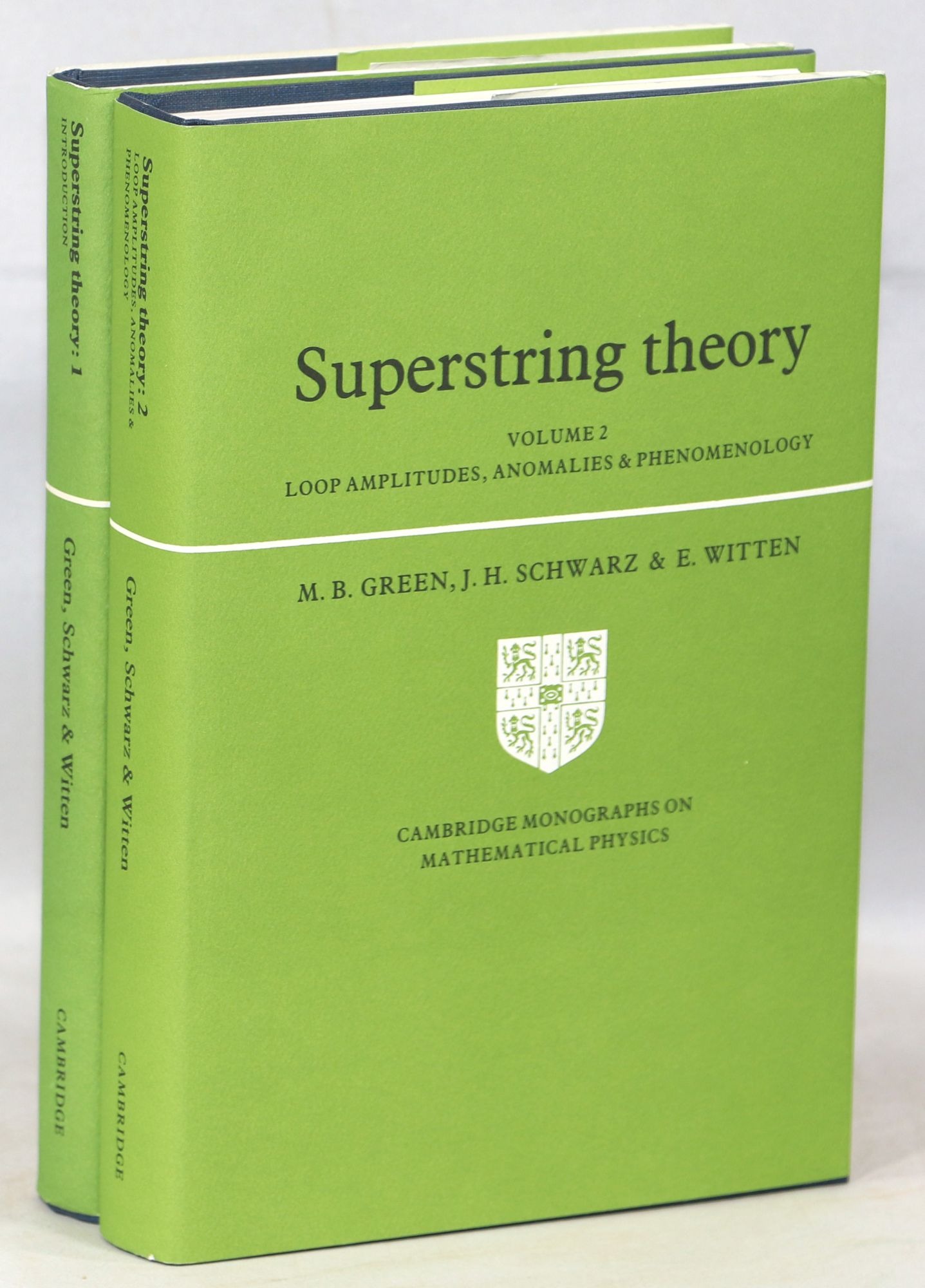
Hello, and welcome to this space of deep inquiry. Have you ever found yourself staring at the ceaseless, chaotic fluctuations of global financial markets or the seemingly insurmountable disparities of global poverty, wondering how humanity can possibly process such overwhelming complexity? I often catch myself reflecting on the sheer volume of variables dictating our daily lives, from microscopic market microstructures to macroscopic geopolitical shifts. Honestly speaking, I used to feel a profound sense of helplessness, asking myself what an individual could possibly do in the face of millions of intersecting data points. The sheer noise of the system seemed to defy any logical resolution. Then, quite serendipitously, I immersed myself in the monumental two-volume treatise, Superstring Theory, authored by Michael B. Green, John H. Schwarz, and Edward Witten. It was an intellectual revelation that struck me with the force of a physical blow. When we typically discuss systemic crises or theoretical physics, it is easy to resort to emotional appeals or surrender to the impossibility of unified understanding. However, this text presented a radically different optical lens. The assertion that the universe resolves infinite complexities through highly structured, topological data compression was a refreshing shock to my system. The ultimate goal is to distill high-dimensional systemic noise into a lower-dimensional, actionable effective reality without losing the fundamental symmetries of the system. This book serves as both a beacon of hope sent from brilliant theoretical minds to the rest of humanity and a cold, rigorous diagnostic manual for reality itself. For those who, like me, have felt a vague despair toward systemic complexity or have been engaging in deep philosophical contemplation, you will likely empathize with the immense resonance this framework provides. I intend to unpack the core messages of this theory, intertwined with my own reflections on financial and systemic architecture. Shall we embark on this massive exploration of dimensional reduction and the ultimate end of complexity?
1. The Genesis of Resonance: Escaping the Singularity of Isolated Entities
To truly comprehend the paradigm shift necessitated by this framework, we must first critically examine the historical background that led to the emergence of string theory, as meticulously detailed in the opening overviews of the first volume. For decades, the vanguard of quantum field theory operated on a fundamental, albeit flawed, assumption: the conceptualization of elementary constituents as zero-dimensional point particles. In the realm of abstract mathematics and localized interactions, this point-particle paradigm was incredibly successful, culminating in the Standard Model. However, when one attempts to integrate the macroscopic geometry of gravity into this microscopic framework, the mathematics shatters. If two point particles interact at a distance of absolute zero, the gravitational force between them scales toward infinity. Nature, in its profound elegance, abhors absolute infinities. In financial ecosystems, we see a parallel catastrophe when models treat assets as isolated, zero-dimensional entities interacting instantaneously without friction; during crises, correlations spike to one, and the resulting risk metrics explode into systemic infinities. The transition from point particles to one-dimensional strings is not merely a geometric novelty; it is a vital necessity for systemic survival. By extending the fundamental entity across a one-dimensional spatial extent, the interaction vertices are smeared out. The catastrophic singularities are elegantly resolved.
As we delve into the mechanics of the Bosonic String, the sheer beauty of classical string motion becomes apparent. A string evolving through time sweeps out a two-dimensional surface known as a worldsheet. The mathematics governing this evolution is encapsulated in the Nambu-Goto action, which dictates that the string will dynamically configure itself to minimize the area of this worldsheet, much like a soap bubble finding its most energy-efficient shape. Yet, to prepare this system for the rigorous demands of quantum mechanics, a more sophisticated mathematical architecture is required. The Polyakov action introduces an auxiliary metric to the worldsheet, decoupling the geometry from the embedding spacetime. This allows for a pristine quantization process. When we apply the principles of quantum mechanics to this vibrating filament, an infinite spectrum of vibrational modes emerges. Each specific harmonic translates into a distinct particle with specific mass and spin characteristics. In this paradigm, the universe is not a chaotic bucket of disparate fundamental building blocks; it is a single, unified instrument playing a vast symphony of resonances.
This realization instills a deep sense of macroscopic reverence. We construct colossal accelerators and intricate financial models, assuming the existence of countless independent variables. Yet, the Bosonic framework reveals that these are merely different manifestations of the same underlying dynamic entity. However, the purely Bosonic string is a flawed masterpiece. It mathematically mandates a 26-dimensional spacetime and, more troublingly, predicts the existence of a tachyon—a particle with an imaginary mass that signifies a catastrophic instability in the vacuum state. In a practical sense, a tachyon is akin to a permanent, unresolvable arbitrage opportunity in a financial market, which ultimately causes the entire pricing model to collapse. Despite these fatal flaws, the quantization of the Bosonic string establishes the critical mathematical grammar that will carry us forward: the absolute necessity of maintaining symmetry and the concept that the universe's most fundamental rules are written on a two-dimensional worldsheet.
The introduction of the Polyakov action is a masterstroke of theoretical engineering. By treating the worldsheet metric as an independent dynamic variable, it transforms a highly non-linear, intractable problem into a manageable framework. In the context of practical discourse, this is akin to decoupling the internal risk metrics of a financial portfolio from the external, embedding macroeconomic environment, allowing for a much cleaner, un-biased quantification of systemic vulnerabilities.
2. The Conformal Fabric: Scale Invariance and the Virasoro Architecture
To navigate the deeper layers of this theory, we must immerse ourselves in the elegant mathematics of Conformal Field Theory (CFT). The two-dimensional worldsheet swept out by the string is not just a passive stage; it is a dynamic realm governed by profound symmetries. The most critical of these is conformal invariance. A conformal transformation preserves the angles between intersecting lines but allows for local stretching and shrinking of distances. On the worldsheet, the physics must remain entirely invariant under these transformations. This implies that at the fundamental Planck scale, the concept of absolute size or scale becomes a mere illusion. The dynamics are entirely dictated by shape and topological relationships. This scale invariance is a powerful conceptual tool; in financial market analysis, we often seek fractal patterns or scale-invariant behaviors where the micro-dynamics of tick data reflect the macro-dynamics of decadal market cycles. Conformal symmetry is the ultimate formalization of this fractal nature.
The lifeblood of this two-dimensional conformal field theory is the Virasoro algebra. In quantum mechanics, symmetries are generated by mathematical operators, and the Virasoro operators act as the supreme architects of the worldsheet's reality. They form an infinite-dimensional Lie algebra that dictates exactly how the string can vibrate and evolve. For a theoretical mathematical state to be considered a physical, observable entity in our universe, it must satisfy exceedingly strict physical state conditions imposed by these Virasoro operators. It is a rigorous auditing process. If a vibrational state fails to meet these conditions, it manifests as a "ghost"—a state with a negative norm or negative probability. In any rational system, a negative probability is a fatal absurdity. The absolute necessity to algebraically annihilate these ghost states is precisely what forces the Bosonic string to demand exactly 26 dimensions. The mathematics is brutally uncompromising; it does not adapt to our empirical observations but rather dictates the mandatory structure of the embedding spacetime to ensure logical consistency.
Understanding CFT is crucial because it forms the analytical engine for everything that follows. The correlation functions calculated within this two-dimensional theory correspond directly to the physical scattering amplitudes of strings in the higher-dimensional spacetime. It is a breathtaking holographic projection: the complex, multi-dimensional interactions of reality are entirely encoded in the conformally invariant mathematics of a two-dimensional surface. When we consider the interacting strings and their scattering amplitudes, we see that unlike point particles which collide at harsh, jagged vertices, strings join and split through smooth, continuous topological transformations of the worldsheet. This inherent smoothness is what cures the ultraviolet divergences—the infinite mathematical blowups at short distances. By replacing discrete, localized interactions with continuous, non-local topology, the theory elegantly bypasses the singularities that plagued decades of theoretical physics. It is a lesson in systemic design: systems that distribute stress across a continuous topology are inherently more stable than those reliant on rigid, localized nodes.
3. Supersymmetric Stabilization: Balancing the Cosmic Ledger
Despite the breathtaking mathematical elegance of the Bosonic string and its conformal worldsheet, it remains fundamentally disconnected from our tangible reality because it lacks fermions. Fermions—such as electrons and quarks—are the essential building blocks of matter, characterized by half-integer spin. Bosons, on the other hand, are the force carriers, like photons and gravitons, characterized by integer spin. A universe without fermions is a universe without structure, without chemistry, without observers. To rectify this glaring omission, the theory undergoes its most vital evolutionary leap: the introduction of Supersymmetry. Supersymmetry posits a profound, hidden equivalence between matter and force; for every boson, there must exist a corresponding fermionic partner, and vice versa. By weaving this supersymmetric requirement directly into the two-dimensional worldsheet, we transition from the Bosonic framework to the realm of Superstrings.
The introduction of worldsheet fermions creates a bifurcation in the mathematical boundary conditions, leading to two distinct sectors of string vibration: the Ramond sector and the Neveu-Schwarz sector. The periodic boundary conditions of the Ramond sector give rise to spacetime fermions, finally providing the theoretical framework for matter. Conversely, the anti-periodic boundary conditions of the Neveu-Schwarz sector yield spacetime bosons. However, simply generating these two sectors is not sufficient to cure the theory of its inherent instabilities. The Neveu-Schwarz sector still harbors the dreaded tachyon, the harbinger of vacuum collapse. To achieve true systemic stability, a supreme mathematical intervention is required. This comes in the form of the Gliozzi-Scherk-Olive (GSO) projection.
The GSO projection is not merely a theoretical convenience; it is a rigorous algebraic filtering mechanism. It dictates that we must truncate the spectrum of allowed string states, retaining only those with specific eigenvalues under a generalized parity operator. When this surgical truncation is executed, a mathematical miracle occurs. The tachyonic ground state is entirely excised from the physical spectrum. The vacuum is stabilized. Furthermore, the number of fermionic degrees of freedom at every mass level perfectly matches the number of bosonic degrees of freedom, ensuring exact spacetime supersymmetry. This precise balancing act brings the critical dimension of the theory down from the unmanageable 26 dimensions to a highly structured 10 dimensions. In the lexicon of financial architecture, the GSO projection acts as the ultimate regulatory framework—it eliminates structural arbitrage (tachyons) and mandates an exact balancing of assets and liabilities (supersymmetry), thereby stabilizing the entire ecosystem and drastically reducing the required dimensions of risk management.
| Structural Phase | Vibrational Sector | Systemic Output |
|---|---|---|
| Matter Generation | Ramond (Periodic) | Spacetime Fermions (Quarks, Leptons) |
| Force Generation | Neveu-Schwarz (Anti-periodic) | Spacetime Bosons (Photons, Gravitons) |
| Stabilization Filter | GSO Projection | Tachyon Elimination, 10D Supergravity |
4. The Miracle of Cancellation: Moduli Space and Anomaly Resolution
Moving into the advanced frameworks detailed in Volume 2, we confront the truly terrifying complexities of quantum interactions: Loop Amplitudes. In a quantum universe, interacting entities do not merely bounce off one another; they continuously split and recombine, forming virtual loops. These higher-order quantum corrections are historically the nemesis of theoretical physicists, as they traditionally yield infinite, nonsensical results. However, within the string paradigm, a 1-loop interaction is topologically equivalent to a torus, a surface with one hole. Higher-loop calculations involve surfaces with multiple holes. To compute the probability of these interactions, one must mathematically integrate over the "moduli space"—a complex geometric parameter space that catalogs all possible inequivalent shapes of these topological surfaces. The profound beauty here is that the integration over moduli space naturally establishes a fundamental cutoff at short distances. The mathematics inherently refuses to probe distances smaller than the string length, thereby naturally averting the infinite ultraviolet catastrophes. It is an exquisite display of self-regulating geometry.
Yet, surviving the threat of infinity is only half the battle; the theory must also survive the threat of paradox. This brings us to the existential peril of "Anomalies." In theoretical physics, an anomaly is a fatal disease. It occurs when a symmetry that is perfectly valid in classical physics is inexplicably destroyed by quantum mechanical fluctuations. For a unified theory to be viable, certain symmetries—specifically gauge symmetry (governing the fundamental forces) and general covariance (governing gravity)—must remain absolutely inviolate. If an anomaly breaks these symmetries, the theory loses its predictive power, yielding negative probabilities or violating the conservation of energy. In the ten-dimensional framework, particularly due to the presence of chiral fermions (particles with a specific handedness crucial for the weak nuclear force), the theory is besieged by both gauge anomalies and gravitational anomalies. The mathematical structure appears destined to collapse under its own weight.
It is here that Green and Schwarz etched their names into the annals of scientific history with the discovery of the anomaly cancellation mechanism. Through painstakingly complex calculations of hexagon loop diagrams in ten dimensions, they revealed a mathematical miracle. They demonstrated that the lethal gauge and gravitational anomalies are not independent; under incredibly stringent conditions, they can be made to perfectly cancel each other out. The universe, however, offers no free lunches. This miraculous cancellation is not a general property; it strictly demands that the foundational gauge symmetry group of the universe must be either the orthogonal group SO(32) or the exceptional Lie group E8 × E8. The rigidity of this mathematical mandate is awe-inspiring. The cosmos is not a playground of arbitrary parameters; its very existence is constrained by the absolute, unyielding necessity of logical consistency. In a world awash with stochastic noise and chaotic data, this mechanism reminds us that true systemic survival depends on identifying and enforcing deep, structural symmetries that perfectly offset systemic risks.
In financial networks, an anomaly is akin to an undetected systemic risk where local hedging strategies (classical symmetries) fail spectacularly under macro-market stress (quantum fluctuations). The SO(32) and E8 × E8 constraints teach us that robust systems cannot be arbitrarily assembled. They require a holistic, deeply intertwined architectural design where localized vulnerabilities are mathematically guaranteed to offset each other across the entire network topology.
5. Topological Obscuration: The Ultimate Data Compression Algorithm
We now arrive at the intellectual zenith of the theory, the profound mechanism that reconciles the esoteric ten-dimensional mathematics with the visceral, four-dimensional reality we inhabit: Compactification. I urge you to conceptualize this not merely as a geometric trick, but as the universe's ultimate Informational Condensation, a supreme data compression algorithm. The mathematical consistency enforced by the anomaly cancellations rigorously demands a ten-dimensional spacetime. Yet, our empirical existence—our architecture, our economies, our biological forms—unfolds entirely within four dimensions (three spatial, one temporal). The resolution to this glaring paradox is topological obscuration. The extra six dimensions have not vanished; they are intricately curled up, compacted into geometric spaces so infinitesimally small that they elude our macroscopic perception.
This compactification is not a chaotic, random crushing of space. To preserve the crucial supersymmetry in our four-dimensional world, the geometry of these six hidden dimensions must be exquisitely specific. They must form what mathematicians call Calabi-Yau manifolds. Imagine the challenge of compressing a massive, petabyte-scale data set representing global financial transactions into a single, actionable dashboard. You cannot arbitrarily delete data; you must utilize an algorithm that folds and encodes the complexity into a lower-dimensional representation without destroying the underlying correlations. The Calabi-Yau manifold is precisely this cosmic zip file. The specific topological architecture of this manifold—its intricate "holes," intersecting cycles, and complex curvatures—serves as the instruction set for our observable universe.
As the fundamental strings vibrate, they wrap around and traverse the microscopic topology of the Calabi-Yau space. The specific geometry of these hidden dimensions dictates the allowed vibrational modes, which in turn determine the precise masses of the particles we observe and the exact coupling strengths of the fundamental forces we experience. The immense informational density of a ten-dimensional reality is elegantly compressed into a four-dimensional holographic projection. The staggering complexity and diversity of our visible world—the fundamental difference between a massive top quark and a massless photon, the distinction between the strong nuclear force and gravity—are not arbitrary fundamental truths. They are the emergent properties, the unzipped readout, of the topological data securely stored within invisible, compactified dimensions. It is a masterpiece of efficiency, demonstrating how macroscopic complexity is invariably birthed from microscopic geometric order.
6. The Phenomenological Horizon: Deriving the Low-Energy Reality
The ultimate test of any profound theoretical framework lies in its Phenomenology—the grueling endeavor to construct a robust, unbroken bridge between the abstract, ten-dimensional heights of supergravity and the messy, empirical data gathered in our particle accelerators. It is the process of translating the perfect, high-energy symmetries of the compressed cosmos into the beautifully flawed, symmetry-broken reality we navigate daily. When we perform the dimensional reduction, integrating out the massive, high-energy string modes that we cannot currently observe, we are left with a Low-Energy Effective Theory. This four-dimensional effective theory is a form of Supergravity, and it contains the vital seeds of the Standard Model of particle physics. It is the actionable interface derived from the incredibly complex backend code.
However, the transition from the pristine E8 × E8 symmetry of the ten-dimensional theory to the familiar SU(3) × SU(2) × U(1) symmetry of the Standard Model requires a sophisticated mechanism of symmetry breaking. This breaking is facilitated by the specific topological properties of the Calabi-Yau manifold, specifically through mechanisms like flux compactification and Wilson lines. Yet, we face an undeniable empirical fact: we do not observe supersymmetry in our daily lives. If it were an exact symmetry, we would see "selectrons" and "squarks" possessing the exact same masses as normal electrons and quarks. Since we do not, supersymmetry must be broken at some intermediate energy scale. Identifying the precise mechanism of this supersymmetry breaking is paramount, as it dictates the coupling structures and mass hierarchies that allow complex chemistry, biology, and ultimately, human consciousness to exist.
This phenomenological pursuit forces us to confront the "landscape problem." There are arguably 10500 topologically distinct ways to configure the hidden Calabi-Yau dimensions, with each configuration predicting a slightly different macroscopic universe with different physical constants. Some critics view this vast landscape as a failure of predictive power. I, however, perceive it as a testament to the inexhaustible generative capacity encoded within the mathematical laws. It instills a profound sense of humility. We are finite, biological beings, utilizing the abstract language of mathematics to decode the sub-Planckian architecture of reality. The fact that we can even conceptualize a ten-dimensional spacetime undergoing topological data compression to yield our specific observable universe is an extraordinary triumph. It reminds us that whether we are parsing the vast landscape of string vacua or navigating the chaotic multi-dimensional data of global financial markets, the key to mastery lies in identifying the underlying geometric structures that dictate the effective reality.
Interrogating the Blind Spots of Systemic Logic
- Topological Resilience in Market Microstructure Just as string theory resolves the infinite collapse of point particles through spatial extension, modern liquidity crises must be navigated through 'topological connectivity' rather than isolated asset metrics. By filtering the stochastic noise of high-frequency trading through high-dimensional compression logic—akin to Calabi-Yau manifolds—we engineer an 'Effective Market Theory.' This ensures structural resilience against probabilistic turbulence and tail-risk events.
- The Virasoro Filter for Systemic Singularity The data deluge of the technological singularity breeds 'Ghost States'—mathematically viable but practically nonsensical market signals. Much like the Virasoro algebra enforces strict physical state conditions, our macro-control structures must embed an 'Anomaly Cancellation' mechanism. Systemic inconsistencies are not merely managed; they are structurally neutralized via inherent architectural symmetry.
Frequently Asked Questions (FAQ)
초끈 이론이 제시하는 거대한 10차원의 세계와 그것이 우리가 경험하는 4차원의 현실로 압축되는 과정은, 단순히 물리학적 난제를 해결하는 것을 넘어 몹시도 경이로운 철학적 통찰을 제공합니다. 끝없는 노이즈와 무질서로 가득 찬 것처럼 보이는 시스템 속에서도, 그 심연에는 이상(Anomaly)을 완벽하게 상쇄하고 기하학적 형태 속에 방대한 정보를 압축해 내는 우주만의 우아한 알고리즘이 존재합니다. 거시적 복잡성을 통제하기 위해 미시적 기하학의 구조를 읽어내는 이 숭고한 지적 투쟁은, 우리로 하여금 유한한 인지 능력을 지녔음에도 끝내 진리에 다가가고자 하는 인간 고유의 위대함과 겸허함을 동시에 느끼게 합니다. 끈의 진동이 빚어내는 이 아름다운 데이터 압축의 메커니즘이, 여러분이 마주한 복잡다단한 현실의 문제를 해석하는 데 새로운 영감의 렌즈가 되기를 진심으로 바랍니다.