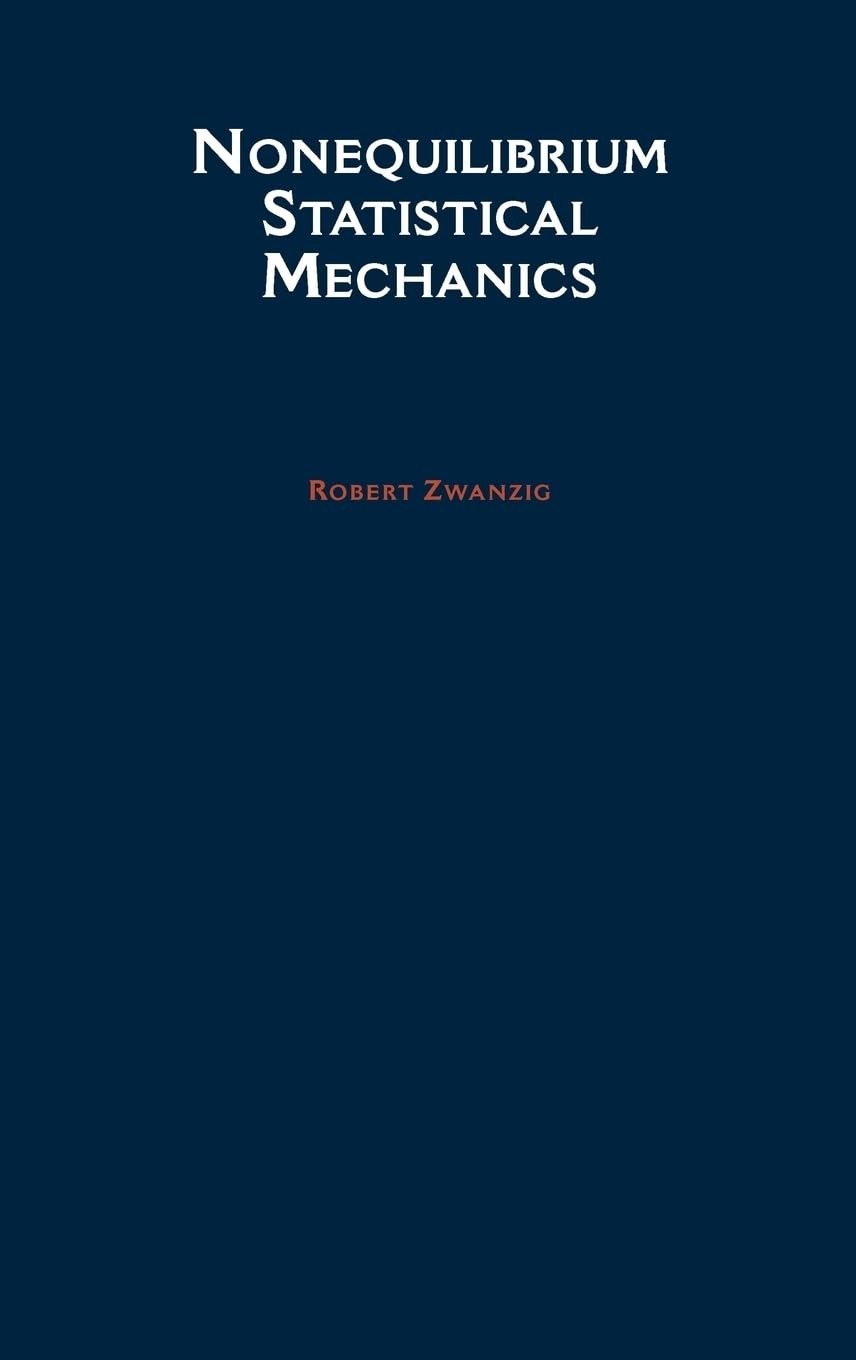
비평형 통계역학 원리를 통한 유동성 함정 회피 전략 5가지 분석
우리의 궁극적인 지향점은 분산된 주체들의 내재적 무작위 변동성을 구조화하여 침체된 거시경제적 평형 상태를 교란하고, 임계 장벽을 돌파함으로써 지속 가능한 시스템적 초과 활력을 확보하는 것입니다. 본 문서는 로버트 쯔반지히(Robert Zwanzig)의 명저 '비평형 통계역학(Nonequilibrium Statistical Mechanics)'의 물리학적 통찰을 금융 및 거시경제 시스템에 이식하여, 전통적 통화 정책이 무력화되는 거시적 정체 구간을 어떻게 탈출할 것인가에 대한 깊이 있는 사유를 제공합니다.
When observing the prolonged stasis of contemporary macroeconomic environments, one cannot help but notice the profound limitations of deterministic policy frameworks. Central banks deploy enormous liquidity, yet the velocity of money remains stubbornly low, trapped in a systemic deep freeze. This condition closely mirrors a physical system trapped in a deep potential well, where thermal fluctuations are insufficient to overcome the activation barrier. To unravel this paradox, we must pivot from classical equilibrium models to the dynamic, fluctuating world of nonequilibrium statistical mechanics. Through the rigorous lens of Robert Zwanzig, we uncover a framework where the unpredictable, localized noise of decentralized economic agents is not merely an error term, but the fundamental driver of systemic phase transitions. The equations of physics, though outwardly cold and indifferent, ultimately describe the collective pulse of countless human endeavors striving against the gravitational pull of economic entropy.
1. Brownian Motion and Langevin Equations in Financial Stagnation
Zwanzig commences his magnum opus by dissecting Brownian motion through the Langevin equation, a paradigm that brilliantly captures the dual nature of macroscopic friction and microscopic fluctuation. In the context of a highly integrated financial system, the macroscopic velocity of capital flow is subjected to a damping force, analogous to the friction coefficient in a viscous fluid. When an economy descends into a liquidity trap, the deterministic restoring force, representing the central bank's interest rate mechanism, essentially flatlines. The drift coefficient approaches zero, leaving the system entirely at the mercy of the stochastic term, the random thermal noise.
Consider the canonical Langevin formulation: m(dv/dt) = -ζv + F(x) + ξ(t). Here, ζ represents the structural inertia or regulatory drag inherent in the financial architecture. F(x) embodies the deterministic policy interventions, which, at the zero lower bound, lose their gradient and become entirely ineffective. The critical variable then becomes ξ(t), the fluctuating force. In classical economics, this is often dismissed as irrational exuberance or unpredictable market sentiment. However, viewed through the sophisticated dual-code of nonequilibrium dynamics, ξ(t) is the aggregate manifestation of decentralized autonomous actions, the decentralized nodes operating at the margins of the economy. Zwanzig meticulously demonstrates that the fluctuation-dissipation theorem binds the friction ζ and the noise ξ(t) together. A system with high friction, burdened by extreme risk aversion and deleveraging, inevitably dampens the spontaneous fluctuations necessary to escape the stagnation well.
The profound insight here is the realization that in a liquidity trap, injecting massive, uniform liquidity merely increases the mass 'm' of the system without altering the fundamental noise characteristics. The policy must instead aim to amplify the variance of ξ(t) specifically at the local level. By fostering environments where decentralized agents can exhibit higher variance in their economic behaviors without facing immediate systemic collapse, policymakers can elevate the effective 'temperature' of the economy. This is not about broad monetary expansion, but about targeted, high-variance fiscal or structural perturbations that disturb the stagnant equilibrium. The random walk of capital, previously confined by a harmonic potential of safety-seeking behavior, must be energized. The beauty of the Langevin approach lies in its acknowledgment that absolute control is impossible; instead, we must cultivate a deep respect for the localized, chaotic energies of individuals, recognizing that within their erratic movements lies the very mechanism for macro-level salvation.
In financial architecture, the theorem implies that the very mechanisms designed to absorb market shocks (dissipation) inherently determine the background volatility (fluctuation) of the market. Over-regulation in a stagnant environment may suppress the critical stochastic innovations required to breach the zero-bound barrier.
2. Fokker-Planck Equations and the Probability Landscape of the Trap
Moving from the trajectory of individual particles to the evolution of the entire ensemble, Zwanzig introduces the Fokker-Planck equation. This mathematical construct governs the time evolution of the probability density function of velocity and position. When mapped onto our economic conundrum, the Fokker-Planck equation describes how the distribution of wealth, investment velocity, and corporate risk-taking shifts over time over a complex potential energy landscape. The liquidity trap is elegantly visualized as a deep basin of attraction in this probability landscape.
The equation takes the form: ∂P(x,t)/∂t = -∂[D(1)(x)P]/∂x + ∂2[D(2)(x)P]/∂x2. The drift coefficient, D(1), pushes the probability mass toward the local minimum, the state of maximum hoarding and minimal investment. The diffusion coefficient, D(2), acts to spread the probability, representing the innate entrepreneurial drive to explore new economic states. In a healthy economy, the landscape features multiple accessible basins, and the diffusion term ensures continuous flow between them. However, in a liquidity trap, the central basin deepens relative to the diffusion strength. The probability density sharply peaks at the stagnation point, and the system reaches a stationary state, Peq(x) ∝ exp(-U(x)/D), where U(x) is the macroeconomic potential.
To alter this bleak probability distribution, one must perform a sophisticated intervention on the boundary conditions. The current paradigm often attempts to merely flatten U(x) through negative interest rates, which essentially creates a de-militarized zone (DMZ) of capital, a flat plain where money sits idle with no gradient to drive it. Zwanzig's exposition suggests a more radical approach: altering the diffusion tensor itself. This implies structural reforms that increase the permeability of economic boundaries, allowing the probability mass to 'leak' into adjacent, highly productive states. It is a transition from attempting to violently shove the economy out of the trap, to subtly reshaping the topological space so that the natural diffusion of human enterprise naturally flows toward a new, dynamic equilibrium. This perspective demands a macroscopic humility, acknowledging that policymakers cannot dictate the path of every dollar, but can only sculpt the probability landscape, trusting the aggregate ingenuity of the ensemble to find the optimal trajectory.
| Statistical Mechanics Concept | Macroeconomic Equivalent | Strategic Implication |
|---|---|---|
| Deep Potential Well (U(x)) | The Liquidity Trap / Zero Lower Bound | Conventional policy gradients fail; system becomes trapped in a hoarding equilibrium. |
| Diffusion Coefficient (D) | Entrepreneurial Variance / Risk Appetite | Must be structurally amplified to allow probability mass to escape the local minimum. |
| Stationary Distribution (Peq) | Long-term Stagnant Equilibrium | Requires exogenous non-Gaussian shocks to permanently alter the distribution profile. |
3. Master Equations, Reaction Rates, and the Kramers Escape
When the probability space is discretized into distinct macroeconomic states, Zwanzig employs the Master Equation to describe the transition probabilities between these states. However, the most profound application for our scenario lies in his detailed treatment of reaction rates, specifically the Kramers escape rate theory. In chemistry, this describes how a molecule overcomes an activation energy barrier to form a new compound. In finance, it describes exactly how an economy trapped in a deflationary spiral musters enough collective momentum to cross the barrier into an inflationary, growth-oriented regime.
The Kramers rate, rk, is fundamentally proportional to exp(-ΔE / kBT), where ΔE is the height of the barrier and kBT represents the thermal energy, or in our dual-code, the systemic liquidity and confidence level. The pre-exponential factor is determined by the curvature of the potential well and the friction coefficient. Zwanzig illustrates that in the high-friction limit (overdamped regime), the escape rate is inversely proportional to the friction. This is a crucial diagnostic tool for modern economies. If the regulatory burden, debt overhang, and structural rigidities (the friction γ) are excessively high, even a massive injection of central bank liquidity (increasing T) will result in a vanishingly small escape rate. The system merely simmers at the bottom of the well, unable to execute the phase transition.
To engineer a successful escape, it is insufficient to solely manipulate the denominator of the exponential. The barrier itself, ΔE, which represents the real economic impediments such as legacy corporate debt, demographic decline, and technological stagnation, must be aggressively lowered through Schumpeterian creative destruction. Furthermore, the intermediate states, the saddle points in the multidimensional energy landscape, must be navigated with precision. This requires optimal stochastic control, an approach closely related to Hamilton-Jacobi-Bellman methodologies, where the objective is to find the minimum action path through the fluctuating environment. My own reflection on this process reveals a poignant truth: the mathematical lowering of ΔE often translates to immense societal friction and human displacement. Recognizing this demands a profound empathy, a realization that the particles transitioning over the barrier are human lives, making the engineering of a smooth, supported transition not just a mathematical optimization, but a moral imperative.
Conceptualizing the Kramers Escape in Macroeconomics
- The Starting State (A): The liquidity trap. Low inflation, low yield, high cash hoarding.
- The Barrier (ΔE): Structural impediments, zombie companies, lack of high-yield investment avenues.
- The Target State (B): Sustainable growth, normalized interest rates, high capital velocity.
- The Catalyst (kBT): Not just M2 expansion, but targeted fiscal stimulus that directly increases the variance of corporate and consumer spending.
4. The Breakdown of Linear Response and the Nonlinear Imperative
A significant portion of Zwanzig's text is dedicated to Linear Response Theory, formulated by Kubo, which assumes that the response of a system to a weak external perturbation is directly proportional to the unperturbed system's time correlation functions. For decades, central banking has operated almost entirely within this linear paradigm. A 25 basis point cut in the overnight rate was expected to yield a predictable, proportional increase in borrowing and investment. However, the defining characteristic of a liquidity trap is the catastrophic breakdown of this linear relationship.
Zwanzig meticulously delineates the boundaries of linear response, noting that it holds only when the external field is sufficiently small and the system is near thermal equilibrium. A liquidity trap is a deeply nonlinear phenomenon, a boundary state where the restoring forces have vanished. When the system is situated flat against the zero lower bound, further small perturbations (e.g., negative interest rates of -0.1%) do not induce a linear shift in the probability distribution. Instead, they often cause paradoxical effects, such as increased saving behavior due to heightened uncertainty. The perturbation is no longer coupling to the system's natural modes in a linear fashion; it is merely distorting the shape of the potential well locally without providing the kinetic energy needed for escape.
The transition from linear to nonlinear problems, as explored in the latter chapters of the book, is essential for contemporary economic survival. We must abandon the illusion that delicate, incremental adjustments will suffice. Nonlinear problems demand nonlinear solutions. This means policy actions that are discontinuous, unpredictable, and massive enough to shatter the existing correlation functions. Theories such as 'helicopter money' or modern monetary theory (MMT) interventions can be viewed mathematically as massive, non-Gaussian shockwaves injected directly into the phase space, designed to forcefully displace the ensemble from the local minimum. Analyzing this through Zwanzig's lens reveals that stability in a deeply stagnant system is actually a vulnerability. To generate alpha, or excess systemic vitality, one must intentionally induce a controlled instability, breaking the symmetries that hold the stagnation in place.
While nonlinear shocks are necessary to escape the trap, Zwanzig's exploration of irreversibility paradoxes warns us that macroscopic interventions can lead to unintended, chaotic microscopic divergences. A massive fiscal shock might cure stagnation but induce uncontrollable, runaway inflation if the high-frequency variables are not properly integrated out.
5. Projection Operators: Distilling the Macro from the Micro
Perhaps the most conceptually demanding, yet profoundly useful, framework in Zwanzig's arsenal is the technique of Projection Operators, pioneered by Mori and Zwanzig himself. In a system composed of billions of interacting degrees of freedom, keeping track of every microscopic state is both impossible and uninformative. The projection operator formalism provides a mathematically rigorous method to separate the "slow," macroscopic variables (like aggregate GDP, inflation, and systemic risk) from the "fast," microscopic variables (like high-frequency trading ticks, daily consumer choices, and localized bankruptcies).
By applying a projection operator P, one projects the exact Liouville equation of the entire system onto the subspace of the slow variables. What remains is an orthogonal subspace Q = 1 - P, representing the fast variables. The genius of this approach lies in how the fast variables are not simply discarded; their cumulative effect is integrated back into the equation of motion for the slow variables as a "memory kernel" and a "random noise" term. This results in the Generalized Langevin Equation (GLE). In the context of a liquidity trap, policymakers often conflate fast variables with slow variables, reacting to daily stock market fluctuations rather than focusing on the deep, slow-moving demographic and structural currents.
Escaping the trap requires a strategic application of the projection operator perspective. The central bank must focus exclusively on shifting the slow variables over the structural barrier. The memory kernel in the GLE represents the historical hysteresis of the economy—the ingrained psychological scarring from previous financial crises that resists new investment. To alter the trajectory, one must alter the memory function. This is not achieved by tweaking overnight rates, but by executing profound paradigm shifts in economic narrative and structural guarantees, essentially rewriting the orthogonal subspace's influence on the macroscopic observables. It is a masterful exercise in focusing on the forest while acknowledging that the rustling of the leaves contributes to the overarching wind. This level of abstraction requires a profound cognitive leap, treating the chaotic hum of human activity not as a distraction, but as the underlying heat bath that, if properly harnessed through optimal control, can generate the necessary lift to transcend the boundaries of economic desolation.
Synthesis of Statistical Mechanics & Macro-Stagnation
Frequently Asked Questions
결론적으로, 쯔반지히의 비평형 통계역학은 거시경제적 정체를 단순히 극복해야 할 오류가 아니라, 구조적인 위치에너지 장벽에 갇힌 시스템의 자연스러운 물리적 상태로 이해하게 합니다. 무수한 개인과 기업의 불확실한 행동을 단순히 제거해야 할 노이즈가 아닌, 침체의 벽을 넘을 수 있는 유일한 열역학적 에너지원으로 인정하는 시스템적 복잡성에 대한 깊은 이해가 선행되어야 합니다.
이러한 관점의 전환을 통해, 금융 연구자들과 정책 입안자들은 단순히 유동성을 주입하는 1차원적 접근에서 벗어나, 확률 공간의 지형 자체를 재설계하는 근본적이고 다차원적인 혁신을 모색할 수 있을 것입니다. 지속 가능한 경제적 생명력은 통제된 예측 가능성이 아니라, 구조화된 무작위성의 역동적인 포용에서 비롯됩니다.