Fat Tails and Lévy Distributions: How Normal Distributions Ruin Your Account
We seek order within the chaos of the market through the 'Spin Glass Theory,' the bible of complex systems physics, and 'Econophysics,' which interprets financial markets through science. We dive deep into how Parisi's theory might just be what saves your portfolio.
To be honest, the stock market charts we look at every day often feel like pure chaos, as if there were no rules at all. That sense of confusion was what first caught my attention and made me want to understand them better. According to the 'Efficient Market Hypothesis' we learned in textbooks, prices should reflect all information immediately and move rationally, but reality is far from it. Sudden crashes out of nowhere, inexplicable herd behavior, and the Black Swans that visit just when we've forgotten them. What on earth is this giant monster called the market thinking?
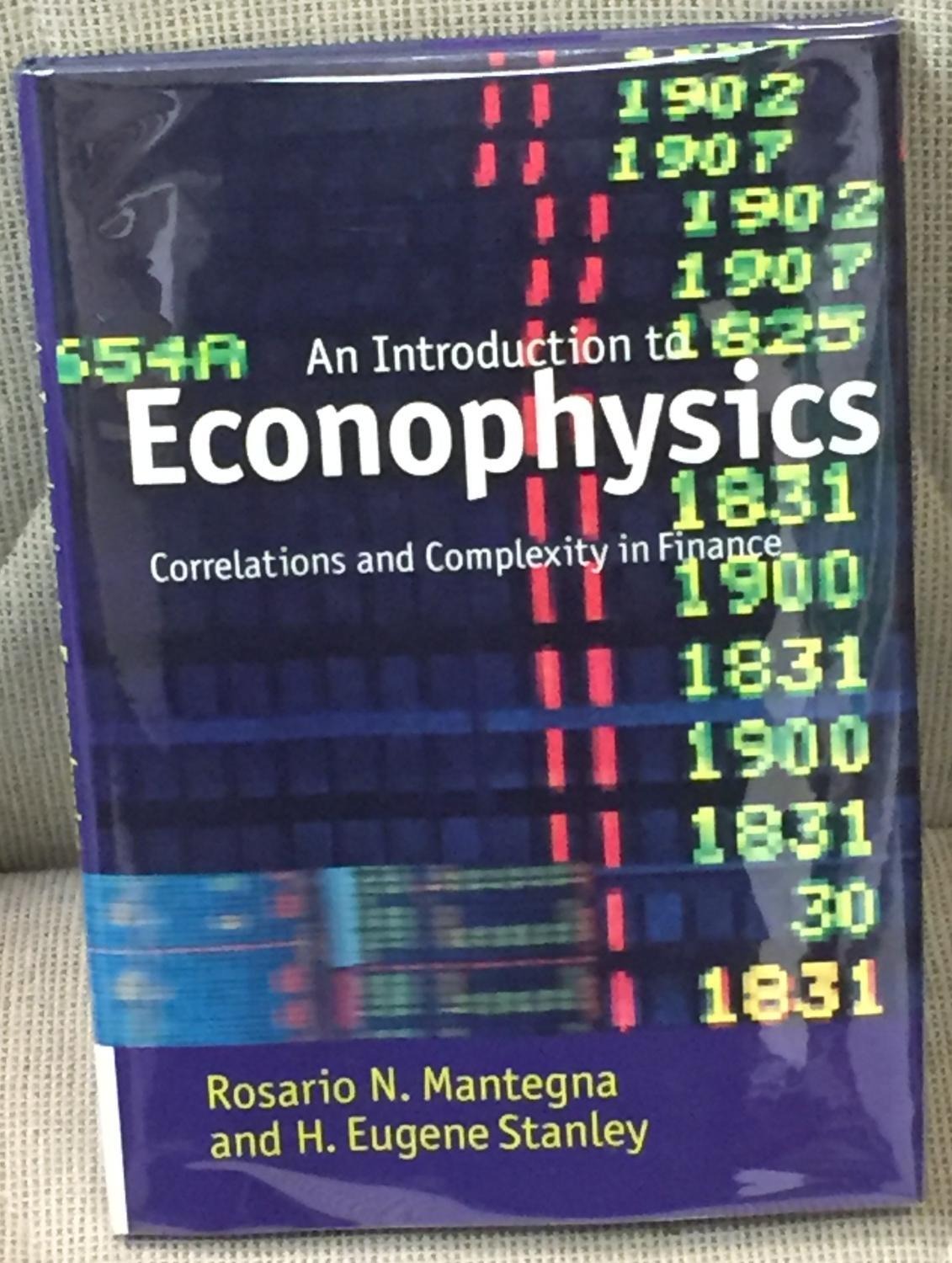
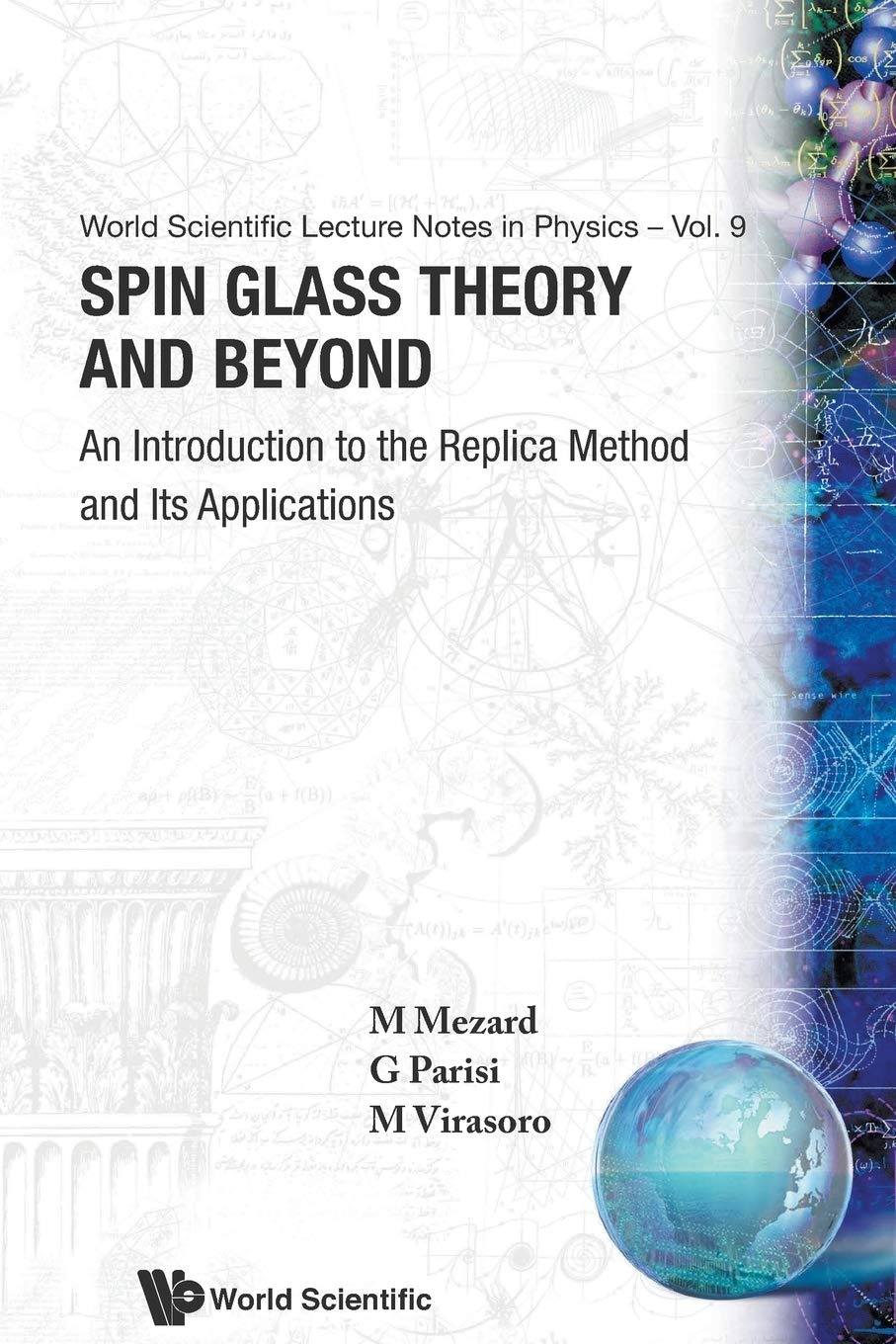
So today, I’ve placed two rather special—or rather, quite heavy—books on my desk. They are <Spin Glass Theory and Beyond>, co-authored by Giorgio Parisi, and <Introduction to Econophysics>, often called the textbook of economic physics. You might ask, "Why would a stock trader read physics books?" But did you know that the energy of 'Frustration' created by microscopic magnetic particles tangling with each other bears a goosebump-inducing resemblance to the structure of financial markets where countless traders engage in psychological warfare? Today, from the perspective of someone who has spent a lot of time exploring markets, I will try to unravel this difficult yet fascinating world of complex systems. Are you ready?
1. Order Hidden Within Disorder: The Aesthetics of Spin Glass and Replica Theory
When we try to understand the market, the first wall we hit is 'unpredictability.' However, physicists took this Disorder itself as a subject of study. The book at that starting point is indeed Mézard, Parisi, and Virasoro's masterpiece, Spin Glass Theory and Beyond. Part I: Spin Glasses of this book goes beyond simple magnetic theory to explain the universal principles of complex systems.
The SK Model (Sherrington-Kirkpatrick Model) covered in Chapter I: The Replica Approach deals with an infinite-dimensional system where all spins interact with each other. In financial market terms, this is analogous to a situation where every investor globally notices each other's positions and influences one another. The core concept here is the Hamiltonian describing the system's energy.
The Sherrington-Kirkpatrick (SK) Model discussed in Chapter I gives us vital insight. Consider the SK Model's Hamiltonian. The interaction Jij between particle i and j is random.
If Jij is positive, they seek alignment; if negative, opposition. But due to random entanglement, 'Frustration' occurs—A wants to be like B, B like C, but C opposite to A. Financial markets mirror this: Bulls, Bears, and Arbitrageurs are locked in a web of conflicting objective functions.
This formula looks simple, but when we move to Chapter III: Breaking the Replica Symmetry (RSB), the story gains philosophical depth. Parisi proposed the Parisi Ansatz, suggesting that replicas are not symmetric to each other, laying the foundation for his Nobel Prize.
What does RSB mean from a financial market perspective? It suggests that a single market Equilibrium does not exist. Instead of the unique optimal price dictated by the Efficient Market Hypothesis, countless 'Metastable States' exist, and the market endlessly drifts between these valleys. This is directly connected to the concepts of Pure States and Distribution of Overlaps discussed in Chapter IV: The Nature of the Spin Glass Phase. The state of the market is not a single point, but a vast Landscape with a complex hierarchical structure. The alpha people look for is hidden somewhere in the local minima of this complex energy landscape.
We must mention the masterpiece by Mézard, Parisi, and Virasoro. This isn't just about magnets; it's about Complexity itself. The core is 'Spin Glass.' Even the name sounds fragile.
Spin Glass is an alloy with random magnetic impurities. The spins face conflicting interactions, falling into a state of 'Frustration.'
The 'Replica Symmetry Breaking (RSB)' in Chapter III is spectacular. Simply put, complex systems don't have one stable state (Global Minimum) but many 'Metastable States.' In the stock market, prices don't converge to one 'fair value.' There are numerous local equilibria, and the market jumps between them. A crash might just be a system transition. This concept of 'Multiple Equilibria' is the key to explaining market volatility that classical economics cannot.
2. The Truth of Financial Data: Econophysics Shatters the Myth of Normal Distribution
Now, let's turn our gaze to Mantegna & Stanley's Introduction to Econophysics. This book is the textbook of econophysics, analyzing the 'raw' financial data using the tools of physics. In Chapter 2: Efficient Market Hypothesis, the authors introduce the assumptions of traditional economics, and then ruthlessly dismantle them through Chapter 3: Random Walk and Chapter 4: Lévy Stochastic Processes.
The traditional Black-Scholes model assumes that stock returns follow a Normal Distribution (Gaussian). But the data I face every day in the field is absolutely not like that. This book clearly shows through Chapter 4.1 Stable Distributions and 4.4 Power-law Distributions that financial data follows a Lévy Stable Distribution.
Here, the exponent determines the thickness of the tail. The reason '6 Sigma' crashes—which should be impossible under a Gaussian distribution—happen frequently in reality is precisely due to this Fat Tail. Mantegna and Stanley precisely demonstrate how these scaling laws appear and where they break down through empirical analysis of the S&P 500 index in Chapter 5: Scales in Financial Data and Chapter 9: Scaling and its breakdown.
Particularly interesting is the Truncated Lévy Flight (TLF) model introduced in Chapter 8: Stochastic models of price dynamics. Since a Lévy distribution with infinite variance is physically impossible, the tail drastically reduces (is Truncated) beyond a certain threshold.
This approach is absolute when managing risk in quant trading. If you calculate VaR (Value at Risk) assuming a normal distribution, you are doomed to bankruptcy. Autocorrelation analysis covered in Chapter 6: Stationarity and time correlation is also crucial. While price changes themselves have almost no correlation (close to a Random Walk), Volatility possesses Long-range memory as pointed out in Chapter 7.2. In other words, if the market is turbulent today, it is highly likely to be turbulent tomorrow. To explain this, Chapter 10: ARCH and GARCH processes appear, which are surprisingly similar to the theory of Turbulence in physics.
3. Visualizing Market Structure: Ultrametric Spaces and the Taxonomy of Portfolios
The point where the two books meet most dramatically is the discussion on 'Structure.' The Ultrametricity covered in Chapter III of Mézard's book and Chapter 13: Taxonomy of a stock portfolio in Mantegna's book are essentially telling the same story. This was the part that gave me the most inspiration when thinking about how to build portfolios.
In spin glass theory, the space of states is not a simple Euclidean space. When there are three states α, β, and γ, the distance d between them satisfies a strong form of the triangle inequality called the ultrametric inequality:
d(α, γ) ≤ max( d(α, β), d(β, γ) ).
This implies that the space forms a hierarchical tree structure. Mantegna and Stanley applied this idea directly to the stock market.
In Spin Glass theory, the space of states is not a simple Euclidean space. When there are three states α, β, and γ, the distance d between them satisfies a strong triangular inequality, namely the Ultrametric Inequality.
What this formula implies is that the space forms a Hierarchical Tree structure. Mantegna and Stanley apply this directly to the stock market. In Chapter 13.1 Distance between stocks, the distance between stocks is defined using the correlation coefficient
.
If the correlation is 1 (perfect synchronization), the distance is 0; if -1 (perfect opposition), the distance is 2. Based on this Distance Matrix, if we draw a Minimum Spanning Tree (MST), surprisingly, the sector structure of the stock market reveals itself naturally. Energy companies cluster together, utilities attach next to them, and tech stocks form a separate giant branch.
Why is this important? Markowitz's Portfolio Theory simply tries to find the inverse of the correlation matrix. However, as pointed out in Chapter 12: Correlation and anticorrelation, the actual market correlation matrix is full of Noise. Using it as is breaks the optimization. But by utilizing the ultrametric space concept and MST borrowed from Spin Glass theory, we can remove the noise and leave only the 'backbone' of the market for truly diversified investment.
In my experience, when a Financial Crisis hits, the structure of this tree shrinks rapidly (Shrinkage). Branches (different sectors) that were usually far apart clump together due to the gravity of Panic. This is similar to the turbulence discussed in Chapter 11: Financial markets and turbulence. Monitoring changes in this ultrametric structure in real-time is the core of risk management.
4. Dynamics and Optimization: From Langevin Equations to Simulated Annealing
The market does not stand still. It moves constantly. Chapter VI: Dynamics of Mézard's book explains this temporal evolution. Here, Langevin Dynamics appears, describing a particle moving under random forces in a Heat Bath.
Here, ηᵢ(t) is the noise term. This connects to the continuous limit of the Random Walk covered in Chapter 3 of Mantegna's book. But what makes Spin Glass theory more interesting is that it explains the Aging phenomenon. The phenomenon where it takes an astronomical amount of time for a system to reach equilibrium because it is trapped in a complex energy landscape explains why the financial market's recovery process after a shock is so slow and irregular.
On a more practical side, Part II of Mézard’s book, on optimization, is like a treasure chest for anyone who enjoys turning ideas into workable strategies. Chapter VII: Combinatorial Optimization Problems and Chapter VIII: Simulated Annealing provide powerful algorithms for solving complex portfolio optimization problems. Like the Traveling Salesman Problem (TSP), finding a combination that maximizes returns while satisfying constraints among thousands of stocks is an NP-Hard problem.
Simulated Annealing uses the principle that a metal's crystal structure stabilizes when heated and then slowly cooled. Initially, high temperature (high randomness) is applied to prevent getting stuck in a Local Minima, and the temperature is slowly lowered to find the Global Minimum.
I use this technique when tuning actual algorithmic trading strategies. The parameter space of a strategy is like rugged mountainous terrain. Simple Gradient Descent is likely to get stuck in the wrong valley. The annealing technique learned from Spin Glass theory becomes a compass to explore this vast parameter space.
Portfolio optimization is ultimately a problem of finding a combination that minimizes risk and maximizes return under numerous constraints. But the 'energy landscape' of the market is so rugged (Rugged Landscape) that simple algorithms cannot escape shallow puddles (Local Minimum). At this time, Simulated Annealing applies 'Heat' initially, allowing the algorithm to kick out of the puddle and explore deeper valleys (Global Minimum).
5. The Gap Between Ideal and Reality: Option Pricing and the Limits of Black-Scholes
Finally, let's talk about the flower of financial engineering: derivatives, or Options. Mantegna & Stanley's Chapter 14: Options in idealized markets beautifully derives The Black & Scholes formula. This formula, which takes the same form as the Heat Equation in physics, brought the financial market into an interpretable world.
However, what really deserves our attention here is Chapter 15, which looks at how options work in real markets. The authors assert that "Real markets are not ideal." As mentioned in Chapter 15.1 Discontinuous stock returns, actual stock prices jump discontinuously. And as discussed in Chapter 15.2 Volatility in real markets, volatility is not a constant but a random variable that dances on its own (Stochastic Volatility).
Here, Mézard's Spin Glass theory steps up again. Market participants interact with different expectations and strategies. The 'endogenous volatility' generated by this can collapse the market without external shocks. The 'frictionless market' assumed by Black-Scholes is as unrealistic as 'non-interacting spins' in Spin Glass.
We must keep this in mind when Hedging. Chapter 15.3 Hedging in real markets suggests that perfect hedging is impossible. Residual Risk always exists, and the problem of minimizing it boils down again to an optimization problem in complex systems. Just as the 'TAP Equations (Thouless-Anderson-Palmer Equations)' of Spin Glass correct the Mean Field theory, we must insert correction terms called 'Market Microstructure' and 'Herd Behavior' into the Black-Scholes model to survive.
6. Econophysics: The Fat Tail Hidden in Charts
Now let's move on to Mantegna and Stanley's book. This book chews, bites, and tastes financial data using physical methodologies. In particular, the physical rebuttal to the Efficient Market Hypothesis (EMH) in Chapter 2 is a must-read for anyone interested in how markets really behave.
Existing financial theories assume that stock returns follow a Normal Distribution (Gaussian). However, Chapters 4 and 8 of this book shatter this assumption by presenting 'Lévy stochastic processes' and 'Power-laws.' When analyzing actual S&P 500 index data, extreme fluctuations (booms or crashes) occur much more frequently than predicted by a Normal Distribution. We call this the 'Fat Tail.'
Comparison: Normal vs. Lévy Distribution
| Category | Gaussian (Normal) | Lévy Stable |
|---|---|---|
| Tail | Decays exponentially fast (Thin) | Decays slowly following power-law (Fat) |
| Variance | Finite | Can be infinite |
| Finance Application | Basis of Black-Scholes Model | Suitable for explaining extreme market moves |
In Chapter 9, the authors introduce the concept of 'Truncated Lévy Flight (TLF).' Since a pure Lévy distribution with infinite variance is unrealistic, a cutoff occurs within a certain range. Why is this important? If you calculate VaR (Value at Risk) for risk management, a crisis that might come once in 100 years under a Normal Distribution assumption might conclude to come once every 10 years under the TLF model. In short, Econophysics is the scientific evidence warning us to "buckle up tighter."
Do not blindly trust the Black-Scholes formula. As pointed out in Chapter 15 of Mantegna's book, actual market volatility is not a constant. It is a 'Stochastic' world where volatility itself dances.
7. Correlation and Ultrametricity: A New Eye to Classify the Market
Here lies the point where the contents of the two books meet incredibly well. It is the concept of 'Ultrametricity.' In Chapter IV of Mézard's book, Ultrametric space is introduced to explain that the states of Spin Glass have a Hierarchical structure. Surprisingly, Mantegna's book Chapter 13 also uses this ultrametric concept to classify stock portfolios.
Thousands of stocks listed on the stock market seem to move individually, but in fact, they are tied together by sticky correlations. Just as SK Hynix is likely to rise if Samsung Electronics rises. Mantegna defines the 'Distance' between stocks using the correlation coefficient rho(i, j).
If we draw a Minimum Spanning Tree (MST) based on this distance, the backbone of the market is revealed. Surprisingly, this structure shows hierarchical clustering where sectors cluster similar to industry classification codes (GICS), and sub-industries cluster within them. This exactly matches the structure in Spin Glass theory where states are tied like a family tree within a complex energy landscape.
How do we apply this theory in practice? When constructing a portfolio, instead of simply dividing "Semiconductor 20%, Pharma 20%," we can select stocks that are Topologically furthest apart through MST analysis to achieve true diversification. The technology of removing noise from the correlation matrix and leaving only the essential structure—this is the Edge that physics has gifted to finance.
8. The Market That Remembers: Neural Networks and Correlations
Does the market remember the past? Random Walk theory says "No," but Complex Systems Physics answers "Yes." The Neural Networks and Hopfield Model covered in MPV Part 3 'Biological Applications' serve as excellent metaphors for understanding the market's memory mechanism.
Hopfield Model and Hebb's Rule
MPV Chapters 12 and 13 model the memory function of the brain. Neurons are connected through synapse strengths Jij and learn according to the Hebb Rule: "Neurons that fire together, wire together." This is a process of creating energy Attractors.
A similar phenomenon occurs in financial markets. When specific news or shocks arrive, assets Synchronize and form strong correlations. The statistical properties of Time Correlation and Correlation Matrices covered in MS Chapters 7 and 12 prove that the market is not simple White Noise. Especially, the Volatility Clustering phenomenon explained in the ARCH/GARCH Models (MS Chapter 10) is prime evidence that the market 'remembers' past volatility. Much like the Aging phenomenon in Spin Glass.
9. Practical Derivatives: Options and the Cavity Method
Finally, let's go to the world of derivatives, or Options. MS Chapters 14 and 15 deal with option pricing in idealized and real markets. The Black-Scholes formula is elegant, but it fails to explain the discontinuous returns and Volatility Smile of the real market.
Hedging and Risk in Real Markets
MS points out the limitations of the Black-Scholes model based on Real Market data. If the movement of the underlying asset follows a Lévy process rather than a Gaussian one, Risk-free Hedging is impossible. Here, the Cavity Method from MPV Chapter 5 can give a hint. The Cavity Method analyzes how the entire system reacts when a new spin is added to the system. This can be applied in finance to evaluate the Stability of the market when new assets or derivatives are introduced, or to calculate the marginal risk when adding an asset to a portfolio.
10. Conclusion: X-Raying the Market with Physics
So far, we have explored the link between complex systems physics and financial markets through Mézard, Parisi, and Virasoro's Spin Glass Theory and Beyond and Mantegna & Stanley's Introduction to Econophysics.
Spin Glass theory gives us the insight that "the world is inherently complex and frustrated, and within it, layers of order are stacked." Econophysics proves based on this insight that "financial data is not a pretty bell curve of normal distribution, but a much rougher, unpredictable wild horse."
Now, the New York Stock Exchange is closing, and markets in Tokyo and Hong Kong are stretching to wake up. The numbers of the market will continue to dance, but now those numbers will look not just like prices, but like the energy states of a giant Spin Glass created by the interaction of hundreds of millions of people's desires and fears.
Read the nature of humans and markets hidden behind the formulas. I hope you too gain the wisdom to pierce through to that essence through these two books. In the next post, I will return with a deeper analysis of 'The Impact of Quantum Probabilism on Algorithmic Trading.' Complexity is not confusion, but merely a pattern we have not yet understood.
Key Summary
The theories were complex and difficult, but are you getting the hang of it now? Let's summarize what we looked at in three points.
- [Frustration and Multiple Equilibria] Like a Spin Glass, the market is a complex system that constantly fluctuates due to the conflicting desires (Frustration) of participants, moving between multiple states rather than a single answer (Equilibrium).
- [Fat Tails and Risk] Abandon the illusion of Normal Distribution. Econophysics proves with data that the market follows a 'Lévy Distribution' and extreme events happen much more frequently than thought.
- [Structural Correlation] By understanding the hierarchical structure of the stock market through the concept of Ultrametricity, true portfolio diversification beyond simple dispersion becomes possible.
Frequently Asked Questions (FAQ) ❓
How was today's exploration into the world of physics and finance? The market is still an unknown place, but at least now we have peeked a little into the structure of that 'unknown'.